 NextNeural
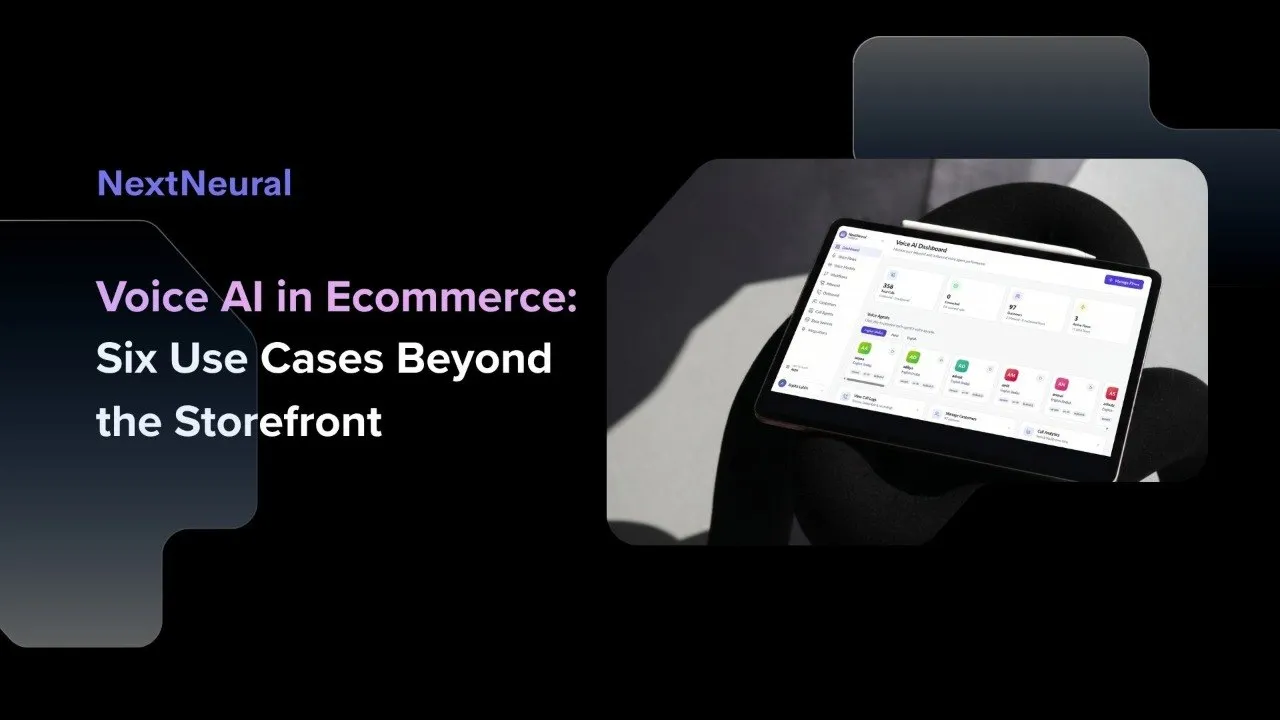
Voice AI in E-Commerce: Six Use Cases Beyond the Storefront
Most ecommerce brands think about the customer relationship in three stages: browsing, checkout, and delivery. But the highest-leverage moments in that relationship often happen on the phone, not on the page. A cart gets abandoned. A cash-on-delivery order needs confirming. A customer who just received their order is primed to buy again but never gets asked. A delivery gets delayed and nobody tells the customer before they find out the hard way.
These are conversations, not just data points, and conversations are exactly what Voice AI is built to handle at scale. Below are six places in the ecommerce journey where a Voice AI agent, calling automatically and grounded in the store’s actual order and customer data, changes the outcome. Each one is a distinct workflow, but together they cover most of the phone-shaped gaps in a typical ecommerce operation.
The table below summarizes the six high-impact Voice AI workflows covered in this article.
| Customer Journey Stage | Traditional Process | Voice AI |
|---|---|---|
| Cart Recovery | Email reminders | Personalized outbound call |
| COD Confirmation | Manual calling | Automated confirmation |
| Upselling | Generic emails | Personalized recommendations |
| Delivery Updates | Customer checks tracking | Proactive notifications |
| Reviews | Email survey | Conversational feedback |
| Support | Call center | AI agent with live data |
1. Cart Abandonment Recovery
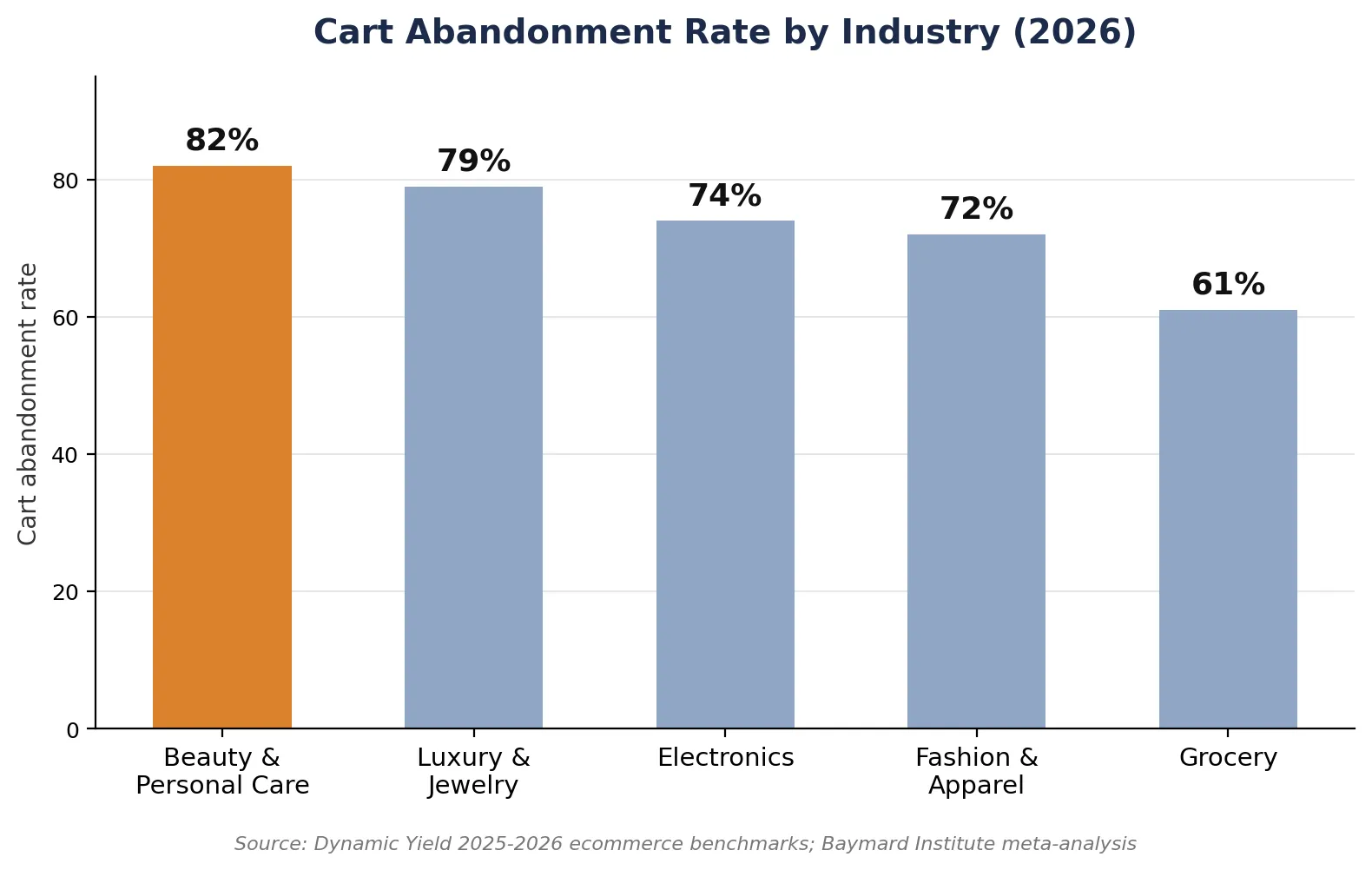
Roughly 70% of online shopping carts are abandoned before checkout completes, and the rate climbs well past 80% in categories like beauty and personal care, where shoppers hesitate over shade matching, ingredients, and skin type before committing. Email and SMS recovery flows catch some of this, but they’re easy to ignore, and by the time a customer opens that third reminder email, the moment that made them want the product has usually passed.
What tends to break: A customer adds a product to their cart, gets distracted or hesitant at checkout, and the brand’s only recovery attempt is an email that competes with a full inbox.
How Voice AI changes it: A Voice AI agent calls the customer shortly after abandonment, references the specific product left in their cart, answers whatever hesitation is actually holding them back, whether that’s a sizing question, a shade concern, or a shipping cost, and can apply a discount code and complete the checkout link on the same call.
We’ve written in more detail about exactly how this workflow gets configured, using a step-by-step cart recovery setup for fashion ecommerce brands, which walks through the data upload, the agent workflow, and the campaign build inside NextNeural. The same structure applies whether the vertical is fashion, beauty, or electronics; only the product data and the talking points change.
2. Cash-on-Delivery Confirmation and Fraud Reduction
In markets where cash on delivery is still the dominant payment method, it’s also the single biggest source of failed deliveries. Industry data puts return-to-origin rates on COD orders at 25% to 45% in several markets, driven by fake orders, customers who simply changed their mind, or buyers who were never reachable at the address given. Every failed COD delivery costs the merchant twice, once to ship it out and again to bring it back.
What tends to break: Orders get dispatched without any real confirmation that the customer still wants them, and by the time a courier discovers the customer isn’t answering or refuses the package, the cost is already sunk.
How Voice AI changes it: A Voice AI agent calls the customer shortly after the order is placed, confirms the order details and delivery address in their own words, and flags the order as confirmed, unreachable, or cancelled before it ever reaches a courier. Confirmation calls of this kind have been shown to cut fraud-related losses substantially and reduce overall return-to-origin rates by a meaningful margin within weeks of implementation.
3. Post-Purchase Upsell and Cross-Sell
The period right after a purchase is one of the highest-intent moments a brand ever gets with a customer, and most brands do nothing with it beyond a generic “thanks for your order” email.
What tends to break: A customer who just bought a product that clearly pairs with something else in the catalogue, a phone case buyer who could use a screen protector, a serum buyer who’s a natural fit for the matching moisturizer, never gets asked, because nobody’s watching for that moment in real time.
How Voice AI changes it: A Voice AI agent can call shortly after a purchase confirms, reference the specific item bought, and suggest a genuinely relevant add-on or complementary product, framed as a helpful suggestion rather than a hard sell. Because the call is grounded in the actual order data, the recommendation is specific rather than generic.
4. Delivery Updates and Proactive Shipping Communication
A large share of “where is my order” support tickets exist because the brand knew about a delay before the customer did and simply didn’t say anything.
What tends to break: A shipment gets delayed, a delivery attempt fails, or an item goes out of stock after the order was placed, and the customer finds out only when they go looking, usually irritated, sometimes already leaving a negative review.
How Voice AI changes it: A Voice AI agent can proactively call or reach out the moment a delay, failed delivery attempt, or fulfillment issue is logged in the system, explain what happened in plain terms, and offer the available options, whether that’s rescheduling, a refund, or a replacement, before the customer has to ask.
5. Speaking the Customer’s Language, Not Just English
This matters more in some markets than others, and India is the clearest example. Research from Google and KPMG has found that roughly nine out of ten new internet users coming online in India are not proficient in English, and a separate 2023 survey found that 57% of urban Indian internet users prefer accessing the internet in an Indian language rather than English, with Hindi the most common choice among them. For a brand selling into these markets, English-only phone support or English-only cart recovery calls quietly exclude a large share of otherwise willing customers.
What tends to break: A brand runs cart recovery, COD confirmation, or support calls only in English, and a meaningful share of customers, particularly outside major metro areas, disengage the moment the call isn’t in a language they’re comfortable transacting in, not because they weren’t interested, but because the conversation didn’t meet them where they are.
How Voice AI changes it: NextNeural voice agents converse natively across 90+ languages, including major Indian regional languages such as Hindi, Tamil, Telugu, Bengali, Marathi, Kannada, and Gujarati, detecting the customer’s preferred language automatically rather than requiring the brand to route calls manually by region or hire separate language-specific staff.
6. Connecting to the Stack You Already Run
None of the above works if it requires an ecommerce team to rebuild its tech stack to get there. Most stores run on a platform like Shopify, WooCommerce, or Magento, with a CRM or helpdesk layered on top, and any automation that can’t plug directly into that stack tends to get set up once, then quietly abandoned after the first manual data export.
What tends to break: A team evaluates a promising tool, discovers it needs a manual CSV export, a custom integration, or ongoing engineering support just to stay current, and either the launch stalls or the workflow breaks the first time the data changes.
How Voice AI changes it: NextNeural connects directly to ecommerce platforms, including Shopify and WooCommerce, along with CRMs and helpdesk tools, through native integrations and webhooks. Cart, order, and customer data flow into the Voice AI system automatically as events happen, a cart is abandoned, an order is placed, a delivery fails, and call outcomes sync back into those same systems without anyone touching a spreadsheet. For stores running a custom or headless setup, workflows can also be built directly on top of SQL databases, CRM records, and uploaded documents.
7. Review and Feedback Collection
Written review requests sent by email get ignored at a high rate, not because customers don’t have an opinion, but because writing a review takes more effort than most people are willing to spend.
What tends to break: A brand wants reviews and structured feedback, but email and SMS requests convert poorly, leaving the brand with a thin, unrepresentative sample of its actual customer sentiment.
How Voice AI changes it: A Voice AI agent can call customers a set number of days after delivery, ask a short set of questions about their experience, and either capture a spoken testimonial directly or guide the happy ones toward leaving a written review, while flagging dissatisfied customers for a support follow-up instead of letting a bad experience turn into a public complaint.
8. Customer Support and Order Status Inquiries
Not every ecommerce brand runs a call center, and the ones that do still see the bulk of their inbound volume made up of the same handful of repetitive questions.
What tends to break: Customers calling to ask where their order is, whether a return has been processed, or how to exchange a size sit on hold or go unanswered, especially outside business hours or during sale-driven volume spikes.
How Voice AI changes it: A Voice AI agent answers these calls directly, pulling live order and shipment status from the store’s systems to answer accurately rather than reciting a generic script, and escalates to a human agent only when the issue genuinely needs one.
One Phone Number, Every Stage of the Journey
Looked at individually, these are six separate workflows. In practice, they’re six moments in the same customer relationship: a cart gets recovered, an order gets confirmed, a complementary product gets suggested, a delay gets communicated before it becomes a complaint, a review gets collected, and a support question gets answered, all through the same channel, grounded in the same order and customer data.
Running each of these as a separate point solution means separate integrations, separate vendors, and separate data silos. The more durable approach is a single Voice AI platform that can be pointed at any of these workflows using the same underlying data connection.
That’s what NextNeural is built to do: one Voice AI layer, connected to a store’s order, CRM, and product data, capable of running cart recovery, COD confirmation, upsell calls, delivery updates, review collection, and support inquiries, each configured as its own workflow inside the same platform.
Try Voice AI with 2000 free credits or speak with the NextNeural team to see which of these workflows fits your store first.
Ready to Transform Your Business with AI?
Join NextNeural today and deploy production-ready AI agents in minutes.
Build an Agent