NextNeural
 Converse: How It Helps to Automate Sales Follow-Ups
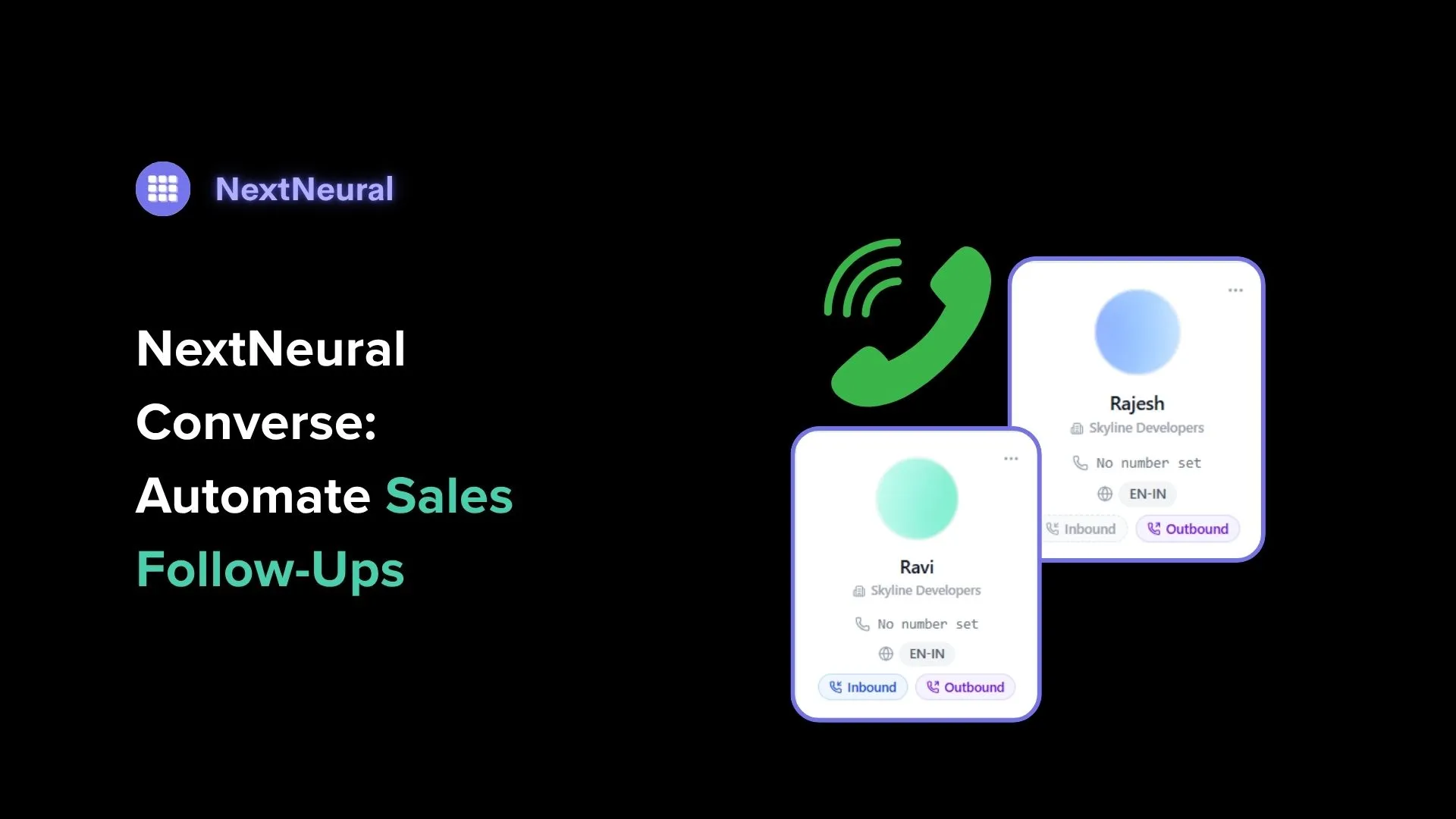
A new lead comes in. Someone from your sales team calls, but the customer doesn’t answer. They try again later. Still unreachable.
A few days later, the agent gets busy with new leads. The follow-up gets pushed down the list.
This happens all the time. Not because sales teams don’t care about following up, but because of the huge volume of calls a human agent needs to make in a day.
And sales follow-up isn’t usually one conversation.
A prospect might need a few calls before they’re ready to move forward. They might ask for a callback next week. They might have a simple question before deciding whether they want a site visit or a loan. Someone else might be interested but not ready to make a decision yet.
Keeping track of all those conversations can become a job of its own.
That’s where NextNeural Converse comes in.
Instead of making your sales team handle everyday routine follow-up manually, you can create a calling agent that handles those calls for you.
It can call new leads, follow up with people who didn’t answer, answer routine questions, understand what the customer is looking for, and move the conversation towards the next step.
Your sales team can then spend more time on the conversations that actually need them.
What Is NextNeural Converse?
NextNeural Converse is an AI agent that handles inbound and outbound calling, helping businesses automate their sales follow-up.
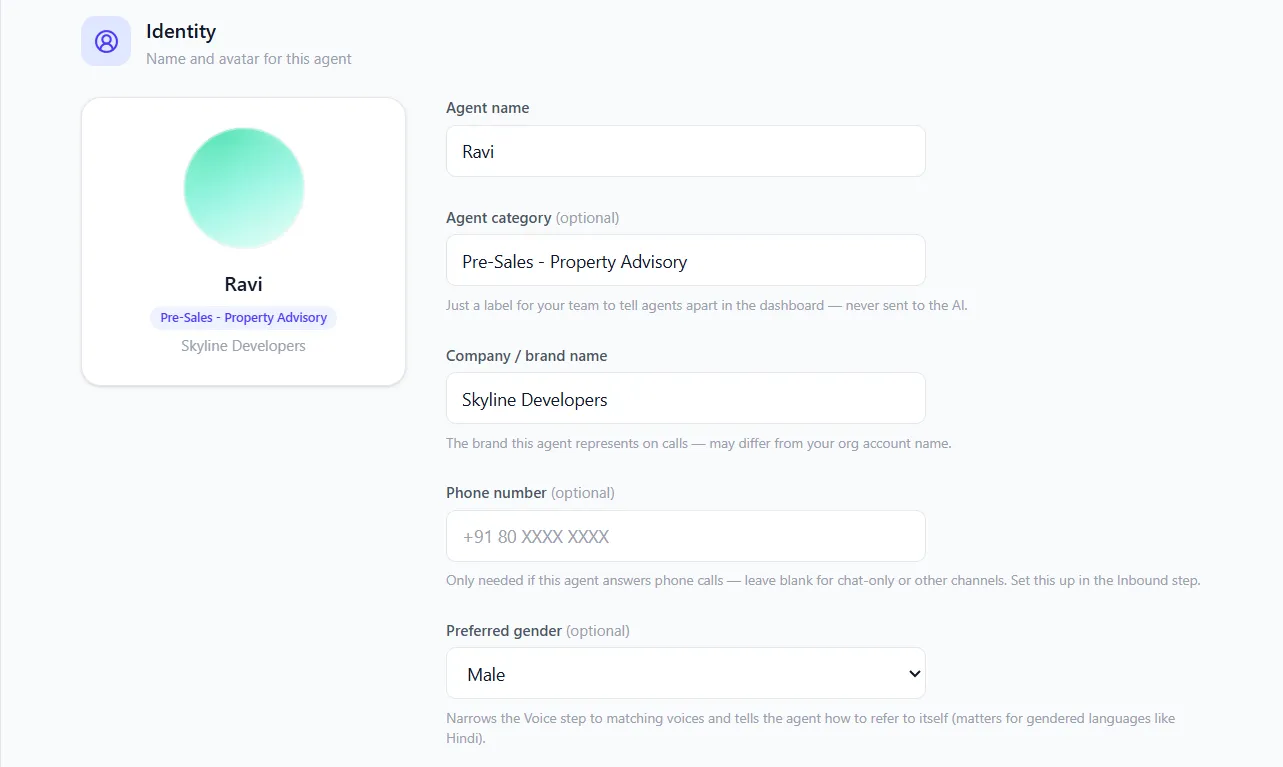
You create an agent for a specific purpose and define how that agent should communicate.
- Role: What is the agent responsible for?
- Personality: How should it speak to customers?
- Voice: What should it sound like?
- Language: Which languages should it speak in?
- Knowledge: What company, product or service information can it use?
- Objective: What should the conversation achieve?
For example, you could create a Property Advisor Agent whose job is to contact new leads, understand their requirements, and suggest properties that suit their requirements.
The agent isn’t just making calls.
It is following a conversation flow that you have defined for a specific sales process.
When Leads Start Slipping Away
Imagine someone shows interest in your product or service.
A salesperson calls.
No answer.
The salesperson is already handling another opportunity, so they make a note to try again later.
The next day, there are more leads to call.
Then more.
Soon, the follow-up list is full of people who were interested enough to enquire, but haven’t had a proper conversation with anyone.
This is where automation can help.
NextNeural Converse can handle the repetitive part of the follow-up process.
The agent can handle the initial conversations while your sales team steps in when the customer is ready for a more detailed discussion.
Here’s a simple view of what happens.
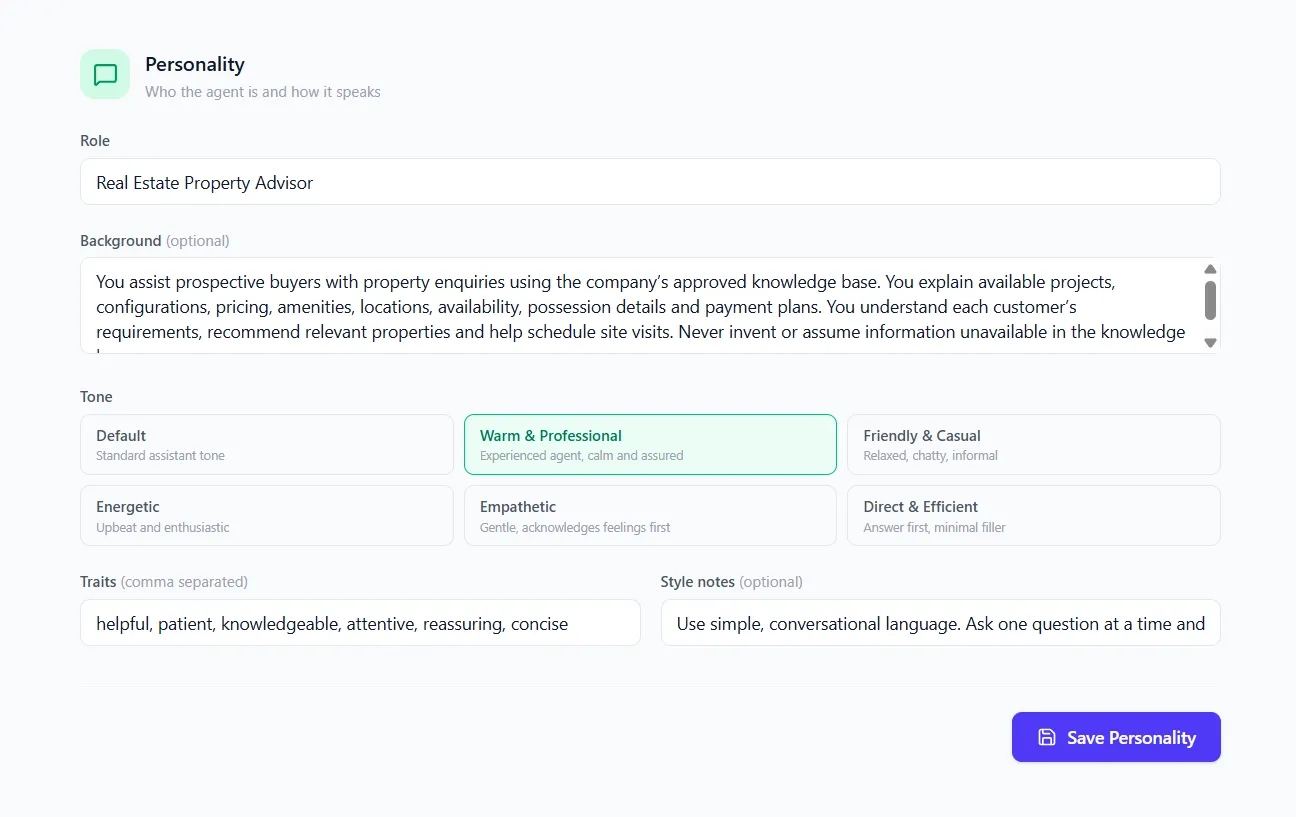
The most important part is that the conversation doesn’t just have to end because the customer isn’t ready to make a decision on the first call.
Start With the Agent, Not the Call
Every business follows up differently.
Some teams need to qualify leads before scheduling a sales conversation.
Others may want to answer common questions before passing a prospect to a salesperson.
Some may simply need to stay in touch with people who have shown interest but aren’t ready to make a decision yet.
The agent needs to understand the agenda of the calls.
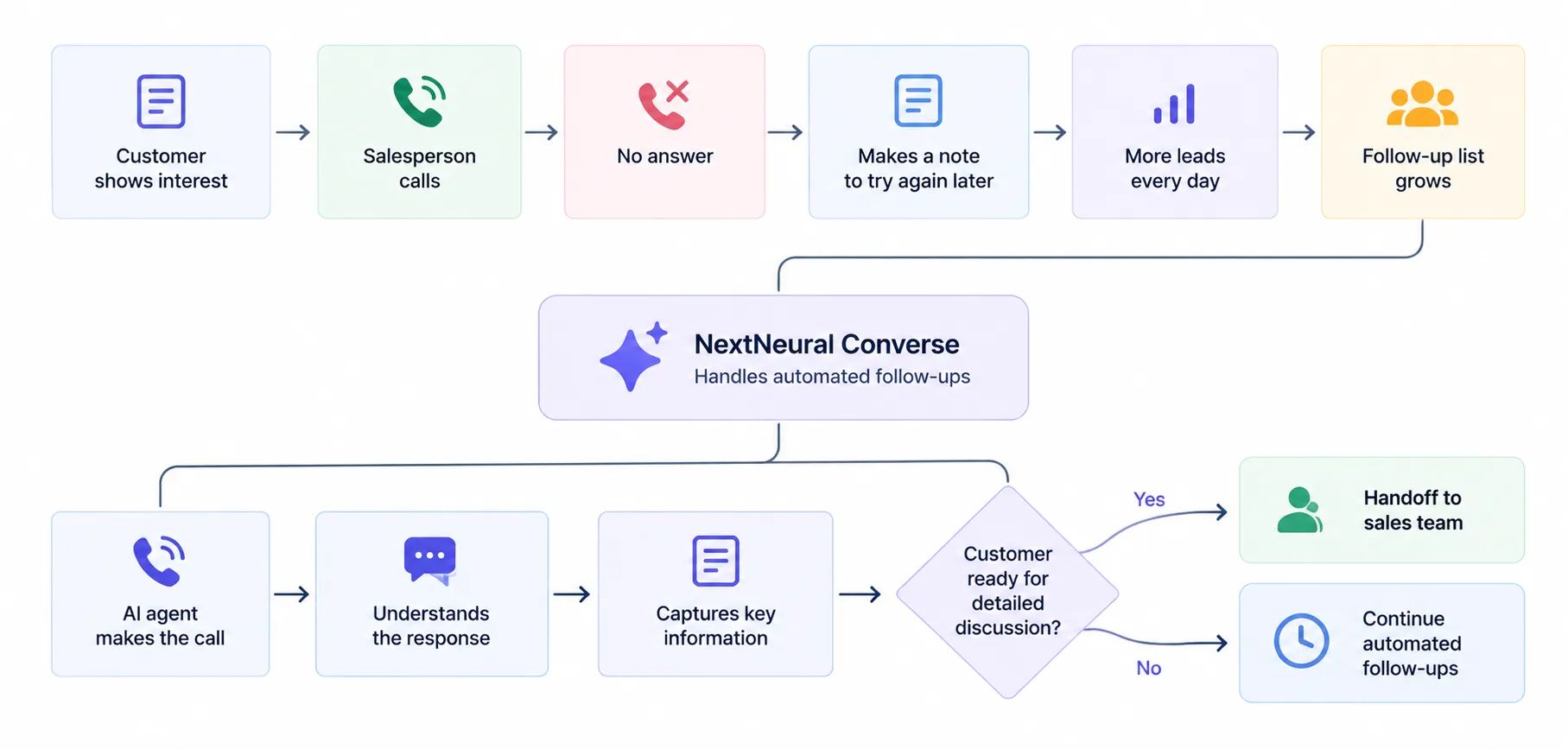
You can do that by creating an agent around a particular role. You can define how the agent should behave, what it knows, how it speaks and what the intent of the call is.
For example:
- Role: Follow-Up
- Personality: Warm and professional
- Languages: English, Hindi, Bengali
- Knowledge: Product information, pricing, FAQs and verified business information
- Intent: Understand customer interest and move qualified prospects to the next step
This gives the agent a clear job rather than expecting it to handle every possible customer conversation.
Keep the Conversation Going
One of the frustrating parts of sales follow-up is having to repeat the same conversation. A customer might have already explained what they need.
They might have said they are interested but want to wait until next month. They might have asked for information and requested a callback after thinking it over.
The next call shouldn’t feel like the first call.
For example, a customer might say:
“I’m interested, but I need a little bit of time. Maybe you can call me next week.”
A useful follow-up isn’t:
“Hello, are you interested in our product?”
It should continue from where the previous conversation ended.
“You mentioned last time that you wanted some time to think about it. Have you had a chance to look at it?”
That customer memory makes the conversation feel more natural and gives the customer a reason to continue talking.
But keeping the conversation flowing naturally isn’t just about remembering what was said. It’s also about understanding how the customer speaks.
When Conversations Switch Between Languages
Customers don’t always use one particular language throughout the call.
They might start in English and switch to Hindi or Bengali when explaining what they actually need or specifying something in detail.
“The property looks good, but abhi mujhe thoda time chahiye family se discuss karna hai. Maybe next week you can call me again.”
Or the customer may ask to speak in a particular language.
“Kya aap Hindi me baat kar sakte hain?”
The agent needs to understand the change and continue the conversation naturally, without making the customer repeat themselves or continue in a language they are uncomfortable speaking in.
With NextNeural Converse, you can create agents that understand and respond in the languages your customers actually use, including calls where people naturally switch between languages.
When the Conversation Needs a Human
Automation doesn’t mean every conversation should remain automated.
Some customers want to speak to a human agent.
Some questions are too complex for a routine call. Some conversations involve negotiation, sensitive situations or decisions that need the judgement of a salesperson.
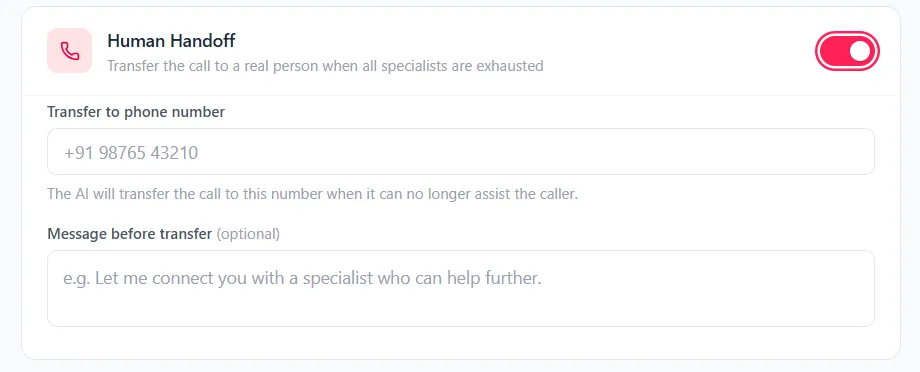
That’s where the human handoff becomes important.
When the conversation reaches a point where a human should take over, Converse can hand it to the appropriate person rather than guessing and forcing an answer to the customer’s questions or enquiries.
The goal is to make sure the human agent enters the conversation at the point where their involvement matters most.
Automation for repetition. Humans for judgement.
Where to Start
You don’t need to automate your entire sales process all at once.
Start with the one that takes up the most repetitive time:
- New lead follow-ups where speed matters
- Missed calls that need another attempt
- Callback requests from customers who aren’t ready immediately
- Routine questions that sales reps answer repeatedly
- Lead qualification before a salesperson gets involved
- Appointment and meeting follow-ups
- Re-engagement with older leads that went quiet
These are the moments where an AI agent can take some of the workload off your sales team.
With NextNeural Converse, the idea is simple:
“Your sales team shouldn’t have to spend their day chasing every lead just to find the ones with high priority.”
The repetitive calls can be handled automatically, while your sales team can focus on the calls where their experience and judgement is needed to move the conversation forward.
Ready to see NextNeural Converse in action?
See how NextNeural can help your team automate inbound and outbound calls to help in the sales process.
Book a demo with NextNeural.
Frequently Asked Questions
Can I create my own calling agent with NextNeural Converse?
Yes. You can create an agent for a specific purpose and define its role, personality, voice, language, knowledge and objective.
Can NextNeural Converse make outbound calls?
Yes. Converse can be used for outbound calling workflows such as lead follow-ups, reminders and qualification.
Can it handle inbound calls too?
Yes. NextNeural Converse can handle inbound customer conversations as well as outbound calls, depending on the agent that you create.
Can the agent hand a conversation over to a human?
Yes. When a conversation needs human involvement, the agent can hand off to a human agent when needed or asked.
Ready to Transform Your Business with AI?
Join NextNeural today and deploy production-ready AI agents in minutes.
Build an Agent